The Bathroom Faucet Has Water. It Just Needs to Be Convinced.
A touchless faucet sounds convenient until washing your hands turns into an audition for a machine that won't explain what it's looking for.
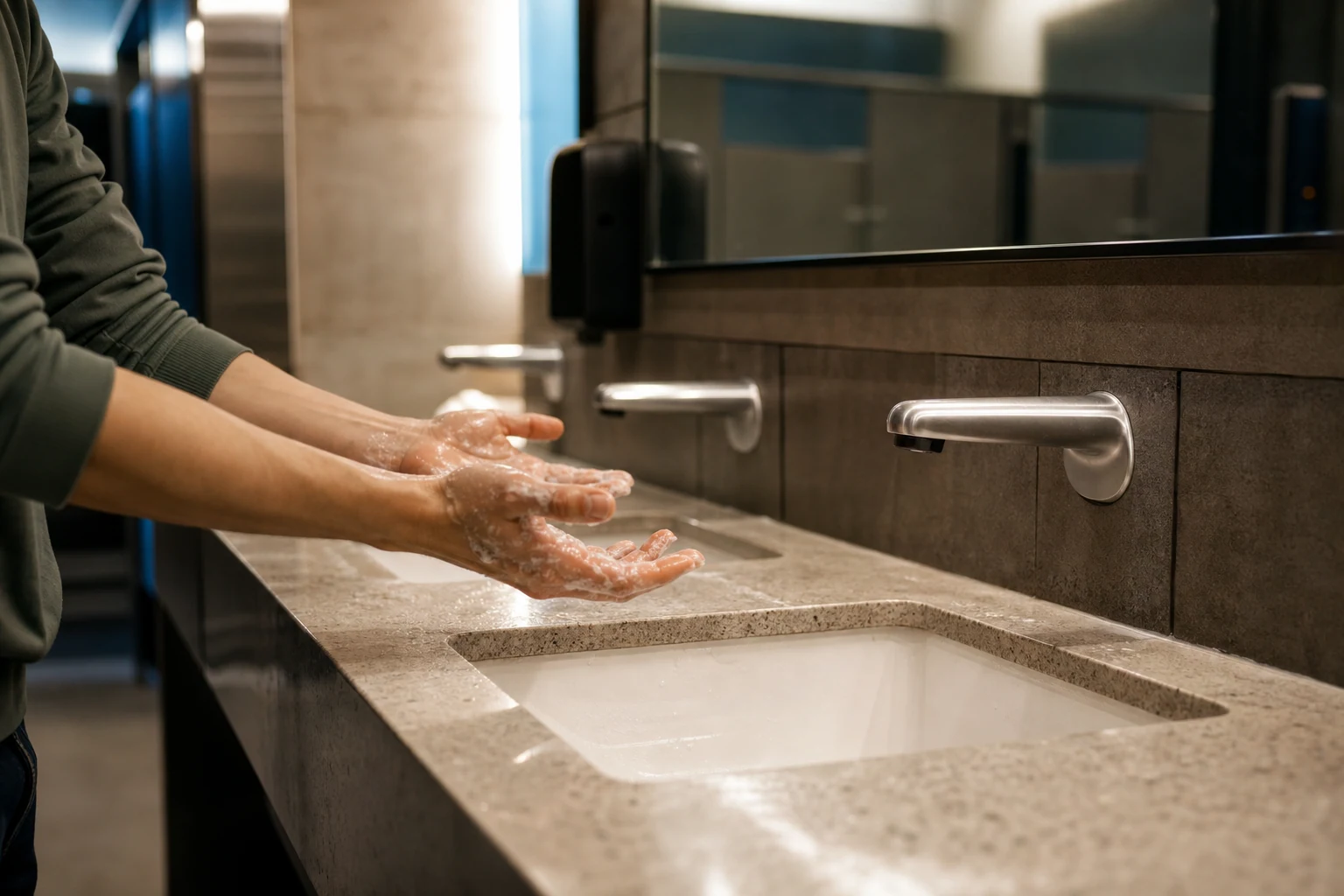
You’re standing at a public restroom sink with soap on your hands, trying to convince a faucet that you exist.
You move your hands closer. Then lower. Then slightly to the left, because apparently water might be over there.
Nothing.
This is an impressive amount of uncertainty to introduce into plumbing.
The appeal of a touchless faucet is perfectly reasonable. Nobody particularly wants to grab a public bathroom handle. A sensor should make the whole transaction easier: hands arrive, water happens, everybody gets on with their day.
When it works, great. When it doesn’t, there’s no obvious next move. A handle tells you where the control is. A smooth metal spout tells you the architect had a vision.
You’re left studying the fixture for a little dark window that might be a sensor. Is it underneath? On the front? Are you too close? Can you be too close to a sink while using the sink?
Apparently I now need to establish the preferred viewing distance of a faucet.
The worst version is the one that briefly works. Water comes out just long enough to confirm that the building has plumbing, then stops as soon as you move your hands to rinse them.
Now you know there’s a correct position. You occupied it once. Unfortunately, you weren’t taking measurements.
So you try to reconstruct the moment. Left hand flat. Right hand cupped. Wrists a little higher. You look less like someone washing up and more like someone carefully explaining the size of a fish.
Meanwhile, the person at the next sink is having no trouble at all. Same general hands. Same apparent need for water. Their faucet has accepted the arrangement.
This makes it personal in a way plumbing should never be.
You could switch sinks, but that involves carrying your soapy hands sideways and admitting defeat in front of a fixture. You give yours another chance.
There’s something particularly ridiculous about a device that removes a control and replaces it with a guessing exercise. The mechanism may be sophisticated, but the person using it has been reduced to waving and hoping.
And no, the answer isn’t that every bathroom needs antique brass taps and a return to some glorious age of communal hand towels. Touchless is a good idea. It just needs to recognize the fairly strong evidence presented by two hands directly beneath a faucet.
That shouldn’t be a borderline case.
Eventually, the water starts again. You hold perfectly still and rinse whatever parts of your hands happen to be underneath it.
The faucet has found a position it likes. Best not to upset it.
The conversation
Have a thought? Add it below. Comments are reviewed before they appear.