The Car Is Parked. Now I Have to Register Its Whereabouts.
A parking spot used to be a place to leave your car. Now it can be a small administrative project you complete while standing next to it.
You find a parking spot. You pull in. The car is parked.
Unfortunately, that was only the physical part of parking. Now comes the paperwork.
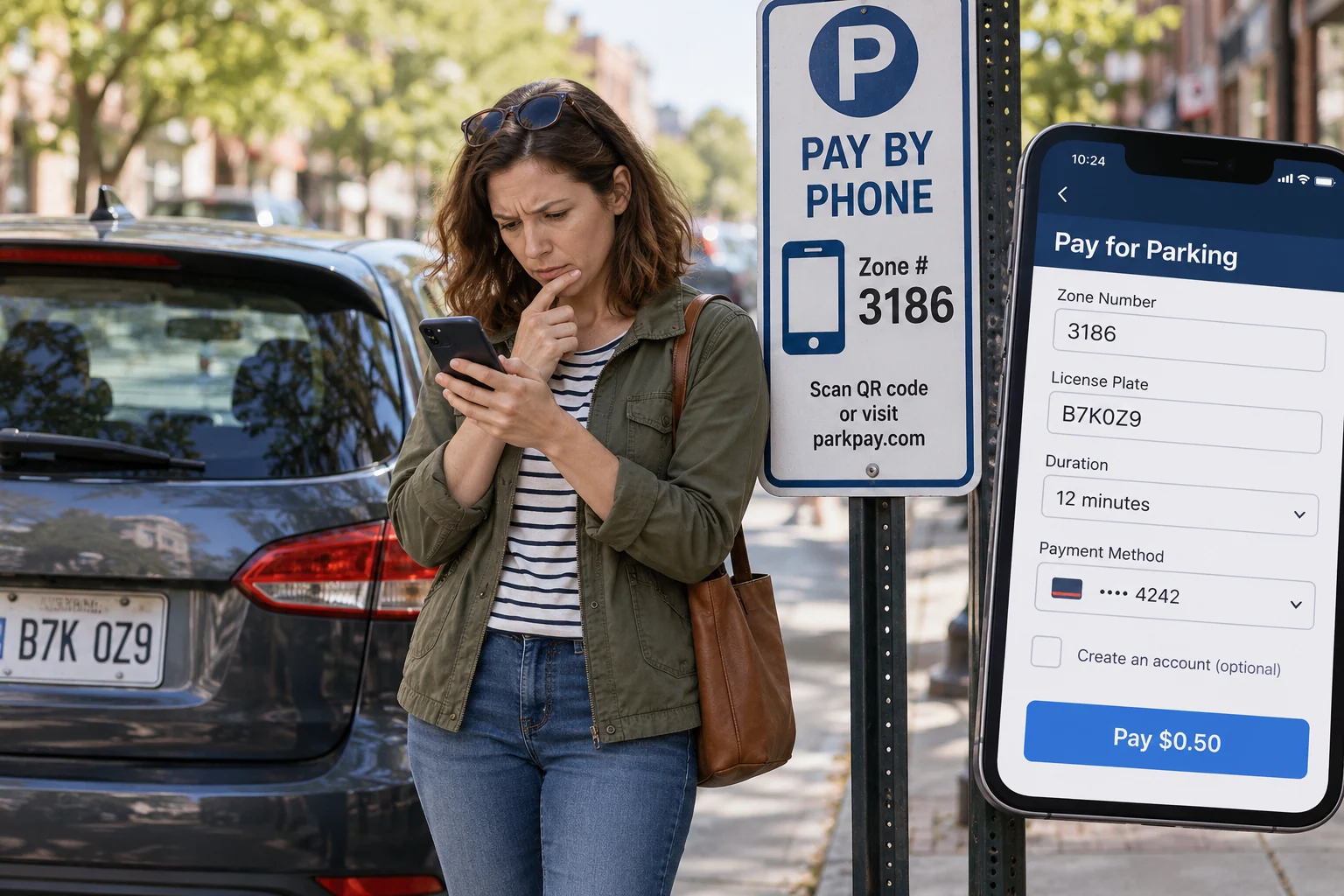
The sign says to pay by phone and gives you a zone number. So you take out your phone, find the payment site or app, enter the zone number, type in your license plate, choose how long you plan to be there, and add a payment method. Depending on the setup, you may also get to create an account. For parking.
All this because the car is going to sit still for a while.
The zone number is my favorite part. You’re already standing beside the car, looking at the sign that tells you where the car is. But the system needs you to report your location back to it. We’ve given the parking space an address and made the customer do the introduction.
Then there’s the license plate. Fair enough, the system needs to know which car you’re paying for. But typing it in while standing on a sidewalk makes you realize how rarely you have to spell your own car. Is that a zero or an O? Better check. A simple errand now includes proofreading the rear bumper.
The whole thing is presented as convenient, and parts of it can be. You don’t need coins. You may be able to add time without going back to the car. That’s useful.
But it’s a strange kind of convenience when paying for twelve minutes of empty pavement involves more screen time than arranging a doctor’s appointment. The meter needed money. This needs your attention, your phone, and possibly a password you last used to park somewhere in April.
And you can’t quite relax when you finish. Did the payment go through? Did you choose the right zone? Is the plate correct? The car hasn’t moved an inch, but you’ve already had several opportunities to park it wrong.
None of this is a crisis. The system generally does the job. It’s just worth noticing what the job has become. You’re standing beside a motionless car, using a tiny computer to tell another computer exactly where it is and how long it intends to remain motionless.
Then, if everything goes well, you’re allowed to walk away from the car you already walked away from.
The conversation
Have a thought? Add it below. Comments are reviewed before they appear.