The Shopping List Used to Be the Whole System
A grocery list once told you what to buy. Now it can hand the job to an assistant, which means you may need to check what it thinks you meant by “milk.”
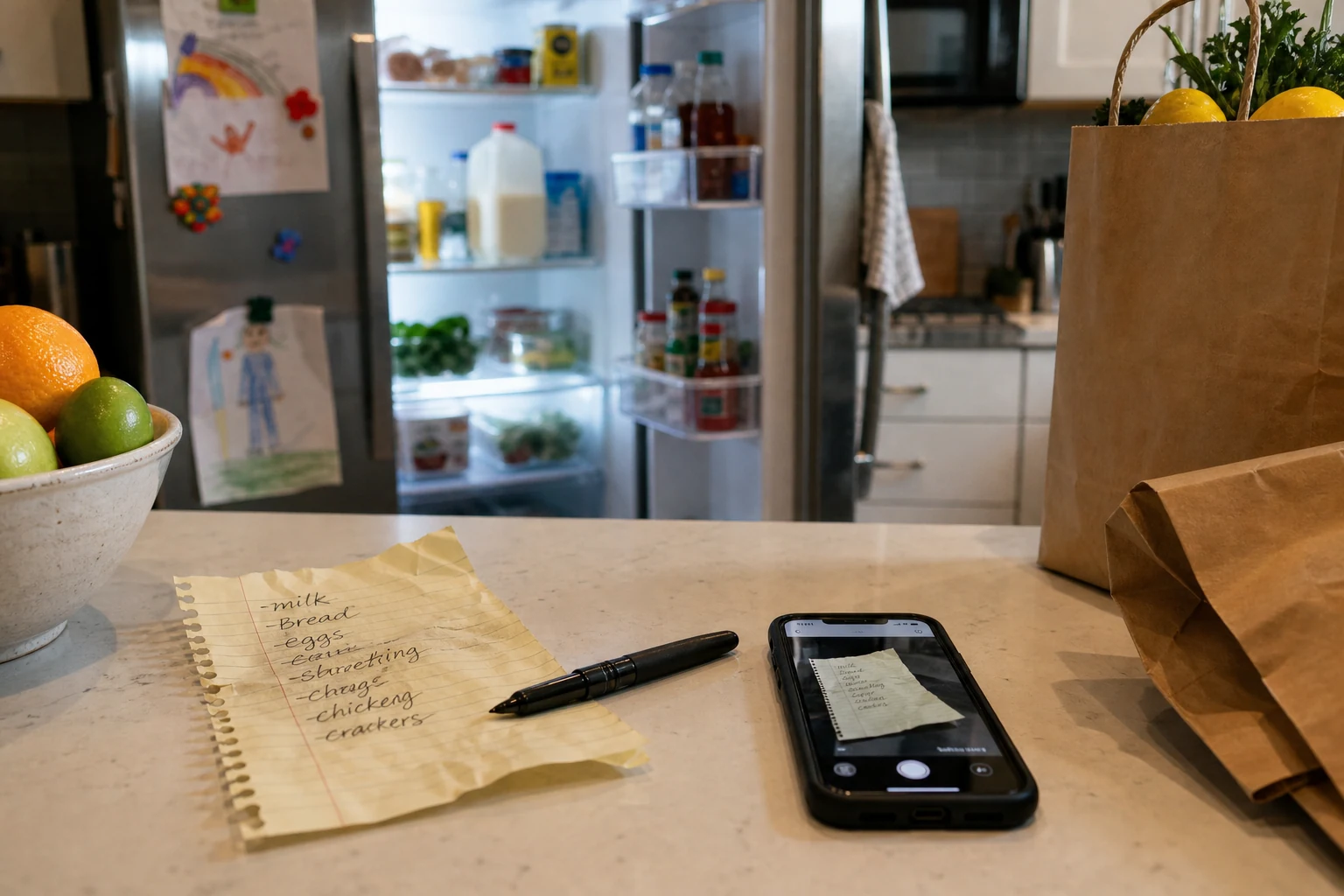
Twenty or thirty years ago, the grocery list might be on the back of an envelope. Milk, bread, eggs, written around an old address and a phone number nobody recognized. The pen was somewhere nearby, unless it had already rolled under the refrigerator.
You took the list to the store. You found the milk, put it in the cart, and crossed off “milk.” That was the entire relationship between the list and the milk. It didn’t need to know which brand you usually bought. It didn’t suggest a larger size because that one was available. It just sat there with a line through it, having done its job.
The system had flaws. The paper could get wet. You could leave it on the kitchen counter, where it remained perfectly accurate and completely useless. Halfway through the store, you might discover that “something for dinner” was not the detailed instruction you’d hoped it would be.
Still, the list was a reminder, not another participant in the shopping trip.
Now the same scribbled list can be photographed and handed to software. Walmart says its Sparky assistant can match items on a handwritten list to products that you review before adding them to an online cart.
I can see the appeal. If the list is long, having the products gathered in one place could save time. Carrying a scrap of paper through every aisle was not some sacred human experience. Most of us were just trying to remember the eggs.
But the change is worth looking at for a second. The old list said “milk,” and you went and got milk. The new list says “milk,” and an assistant proposes a specific milk. Now you check the brand, the size, the quantity, and whether the cart contains what you actually wanted. The list has acquired a middle manager.
Back then, an unclear entry was between you and the person who wrote it. “Crackers” might require a little thought in aisle six. Today, the same vague instruction can become a product choice you inspect on a screen. We haven’t eliminated the mystery of “crackers.” We’ve given it a suggested answer.
And yes, you can still write the list by hand. That’s the part I like. The envelope survives. The handwriting survives. Somewhere in the process, though, a note that used to tell you what to look for has become something that needs interpreting, matching, and checking.
We taught the shopping list to shop. Now we have to make sure it understood the list.
The conversation
Have a thought? Add it below. Comments are reviewed before they appear.