Are “Flushable” Wipes Actually Safe to Flush?
They may disappear when you press the handle. That doesn’t mean they’re a good idea for your pipes.
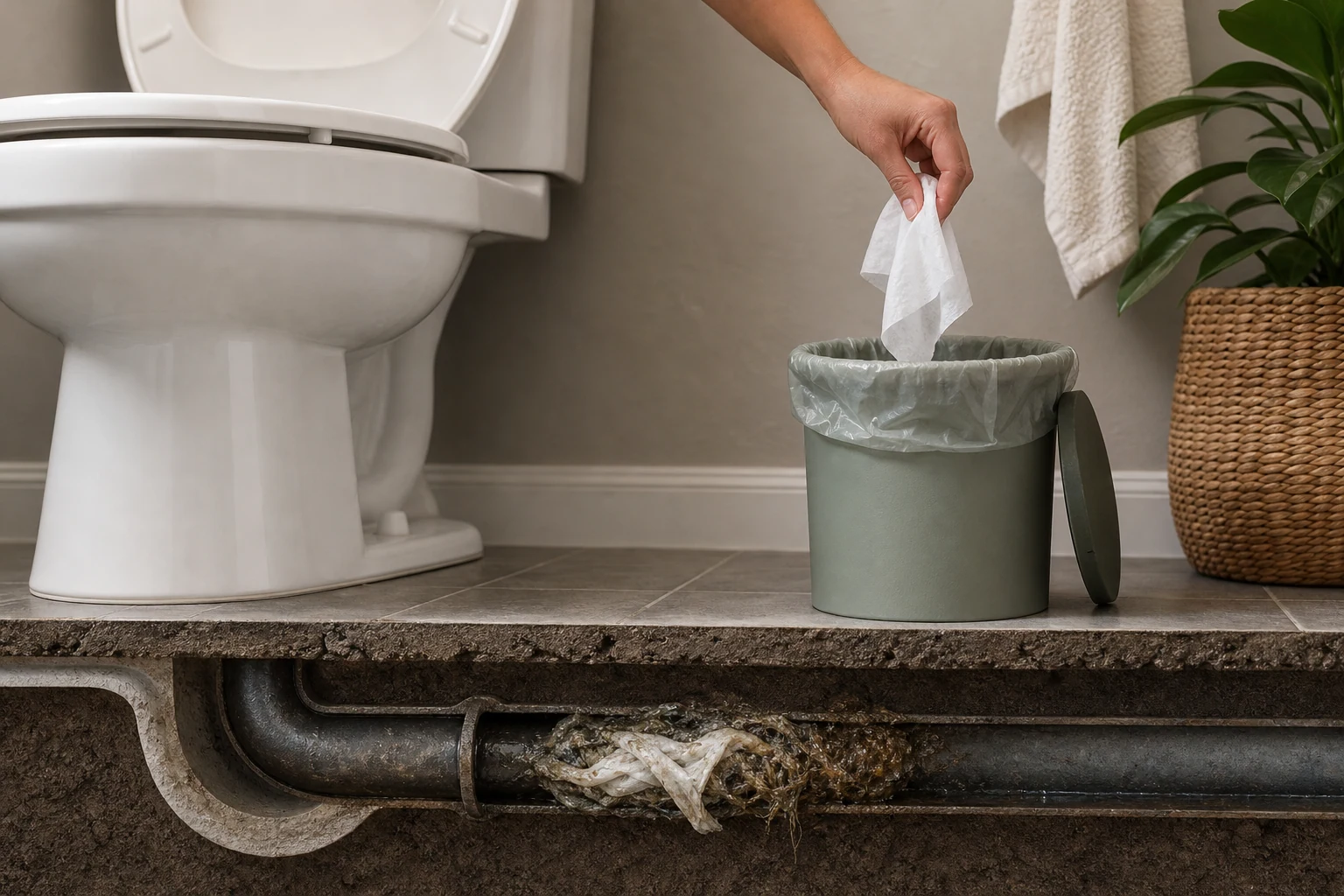
No, I wouldn’t flush wipes, even ones labeled “flushable.” They may go down the toilet, but getting past the bowl is only the first part of a much longer trip.
Toilet paper breaks apart readily in water. Wipes are made to stay strong while they’re wet, which is useful right up until you ask your plumbing to deal with them. A wipe that clears your toilet can still catch farther along in a household drain or sewer line. If you have a septic system, it can cause trouble there, too.
That’s the annoying distinction: “It flushed” doesn’t mean “it’s safe for the whole system.” The toilet isn’t giving you a performance review. It just made the problem somebody else’s, possibly future you’s.
If you already use wipes, put a small lined trash can beside the toilet. It’s not an elegant revelation, but it’s cheaper than discovering where a drain line runs. Check the package for disposal instructions, but don’t treat the word “flushable” as a promise that the wipe can’t cause a clog.
Flushed a few already? You don’t need to assume disaster. Just stop adding more. If the toilet starts draining slowly, backs up repeatedly, or other drains react when you flush, that suggests a plumbing problem worth getting checked. A plunger may clear a simple toilet clog; it won’t tell you what’s happening farther down the line.
The practical rule is boring for a reason: flush toilet paper and human waste. Put wipes in the trash. Apparently “goes down” and “should go down” needed separate labels.
The conversation
Have a thought? Add it below. Comments are reviewed before they appear.