Why Does the Hook on Your Tape Measure Wiggle?
That little bit of movement usually isn't a defect. Before you tighten the rivets, here's what the hook is doing and how to tell normal movement from actual damage.
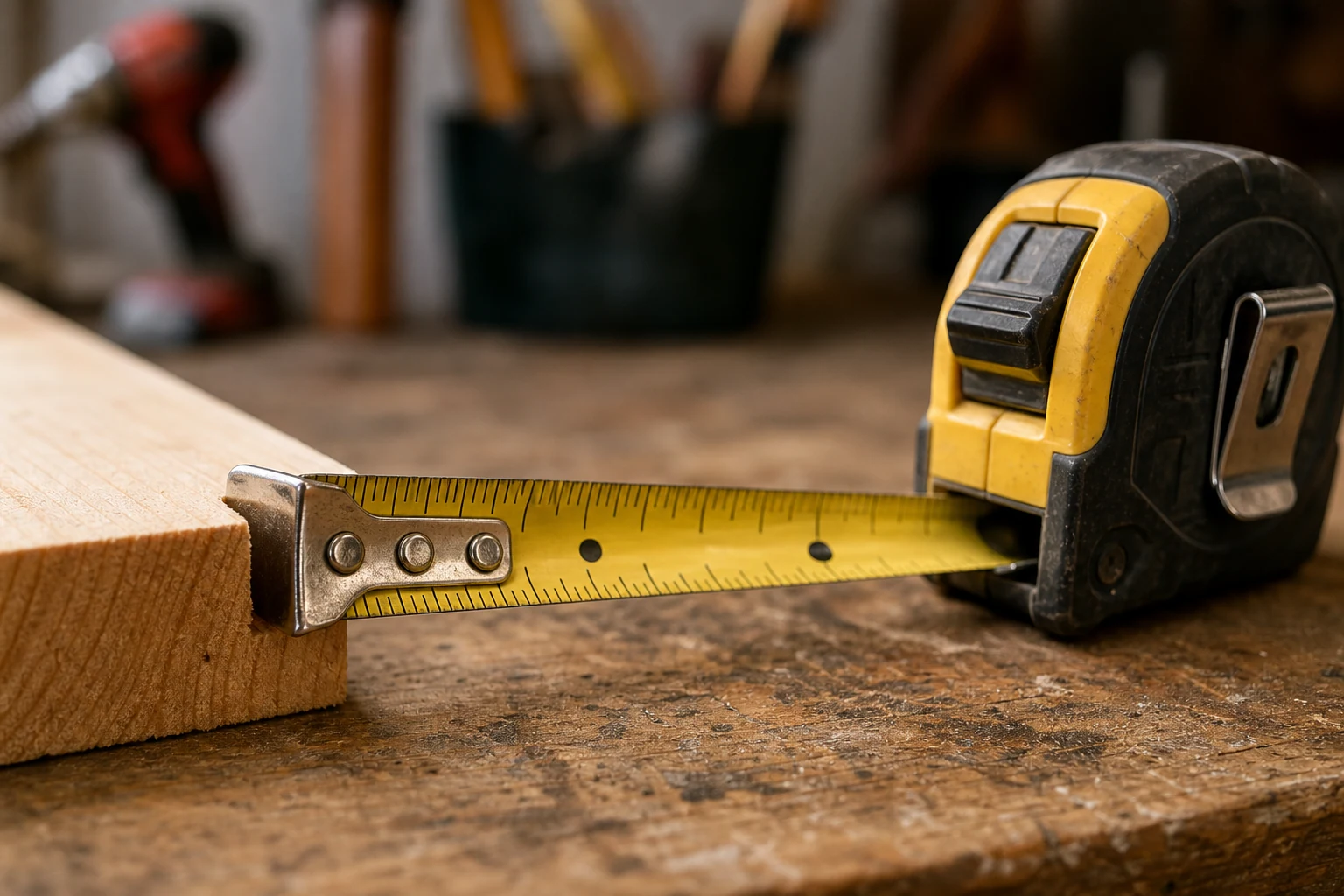
The hook on most retractable tape measures is supposed to slide back and forth slightly. That movement compensates for the thickness of the hook, so you can measure by either catching it over an edge or pushing it against a surface.
In other words, don't grab pliers and fix it into place. You may successfully repair the accuracy right out of it.
Why a fixed hook would cause a problem
A tape measure has to handle two different jobs:
- Measuring from an outside edge: You catch the hook over the end of a board and pull the tape away. The hook slides outward.
- Measuring from an inside surface: You push the hook against something, such as the inside face of a cabinet. The hook slides inward.
Those two methods put opposite faces of the metal hook against your starting point. Since that metal has thickness, a rigidly fixed hook would introduce an offset in one of the measurements.
The sliding arrangement accounts for that. On a properly made, undamaged tape, the intended travel is approximately the thickness of the hook. It's a small mechanical solution that looks suspiciously like something came loose.
Normal sliding isn't the same as a damaged hook
The useful movement is along the length of the blade, in and out. Not every kind of wobble deserves a free pass.
Check for these signs of trouble:
- A bent hook that no longer sits squarely against an edge.
- Missing rivets, visibly damaged mounting holes, or substantial sideways twisting.
- Glue, paint, dirt, or rust preventing the hook from sliding freely.
- A creased or damaged blade near the hook.
A little play by itself doesn't prove the tape is inaccurate. But a hook that has been bent in a drop won't necessarily measure correctly just because it still moves.
How to check whether yours is still measuring properly
Suggested checks, not hands-on test results: These are general inspection steps, not a verification of your particular tape measure.
Start by moving the hook gently inward and outward. It should reach its stops without needing to be forced. Wipe away loose debris, but don't file the hook, squeeze the rivets tighter, or add lubricant without checking the manufacturer's guidance.
Then compare it with a rigid ruler you trust. Keep the tape straight and supported, and check both measuring methods: pulling the hook over an edge and pushing it against a flat stop. Make sure the ruler's zero mark, not necessarily its physical end, shares the same starting point.
If the two methods give noticeably different results, repeat the check before blaming the tool. A tilted hook or misaligned starting point can create an impressively convincing wrong answer.
What if you need to finish one measurement?
You can bypass a questionable hook by starting at a clear mark farther along the blade. For example, place the 1-inch mark at the start of the object, read the other end, then subtract 1 inch.
That only bypasses the hook. It doesn't fix a damaged blade or establish that the tape itself is accurate. And forgetting the subtraction creates a whole new problem, usually discovered after cutting.
If the hook is bent, its mounting is damaged, or repeated comparisons show a mismatch, replace the tape or follow the manufacturer's repair guidance. Normal in-and-out movement is intentional. A mangled end isn't a feature.
The conversation
Have a thought? Add it below. Comments are reviewed before they appear.